

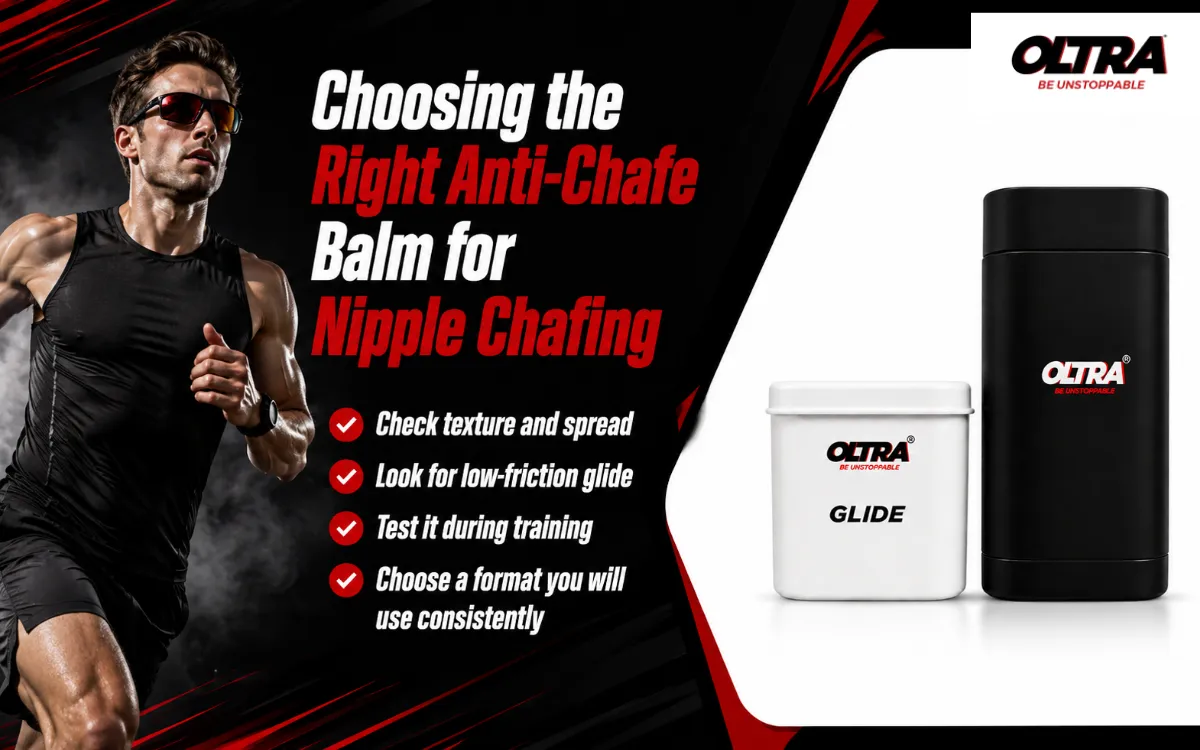
A growing range of balms, creams, sticks, patches and powders is available to runners. The choice can feel confusing, especially when nipple chafing has already caused a painful training experience.
The right anti-chafe balm should be easy to apply, comfortable during movement and suitable for the runner’s preferred kit. Looking beyond promotional claims helps identify a product that can become part of a dependable routine.
Begin with the Application Format
Application affects whether the runner will use the product consistently.
A traditional cream may offer flexible coverage but can leave residue on the fingers. A direct stick or applicator can be cleaner and easier to use immediately before dressing.
Consider whether the product:
-
Reaches small sensitive areas accurately
-
Covers larger hotspots
-
Fits in a running bag
-
Can be reapplied privately
-
Requires hand washing
-
Remains secure in warm weather
-
Has a replaceable or disposable container
Convenience matters because protection must be applied before most relevant runs.
Check the Ingredient Information
A reputable product should provide a clear ingredient list. This helps people avoid known sensitivities and understand what is being applied to the skin.
Some runners prefer plant-based formulas, while others prioritise an unscented option. People with sensitive skin should patch-test a small amount before using the balm across a larger area.
Stop using any product that causes burning, itching, rash or swelling. “Natural” does not guarantee compatibility with every person.
Look for a Low-Friction Skin Feel
The central purpose of a balm is to help reduce drag. It should spread evenly enough to cover the full contact zone without creating uncomfortable build-up.
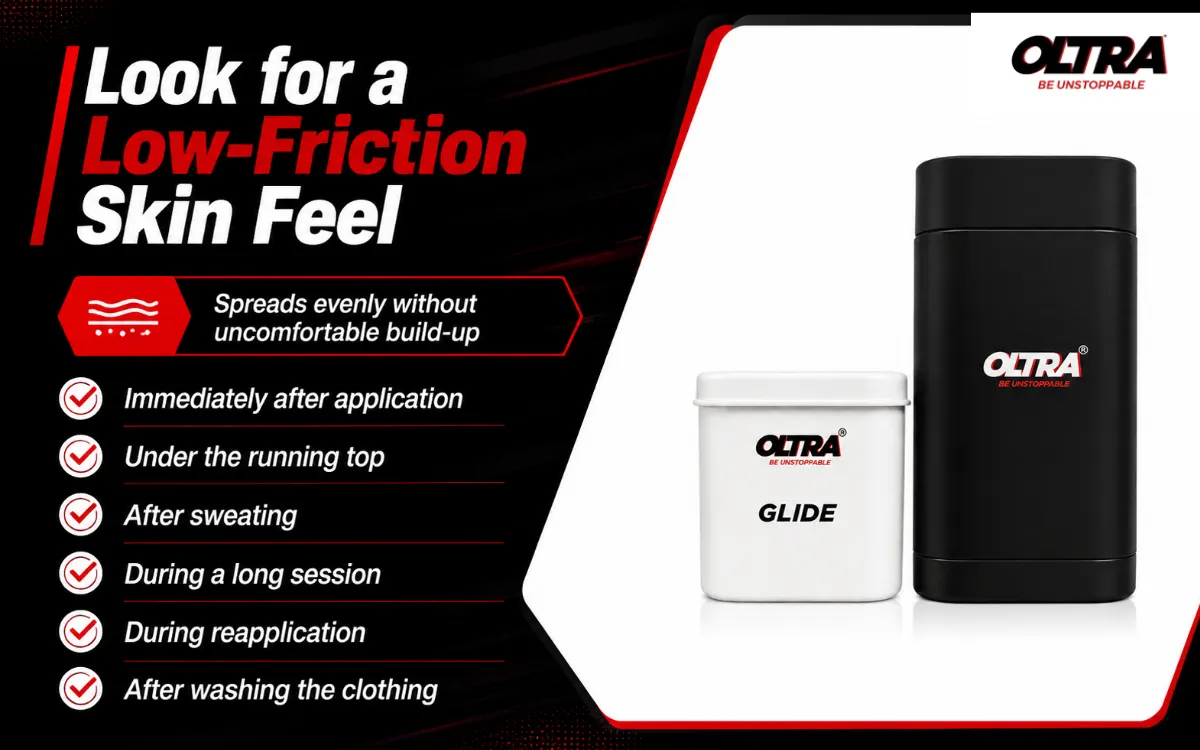
The runner should assess how it feels:
-
Immediately after application
-
Under the running top
-
After sweating
-
During a long session
-
During reapplication
-
After washing the clothing
A greasy feel is not automatically proof of better protection. The preferred texture is a personal choice, but it must remain comfortable during movement.
Consider Fragrance Carefully
Scent can improve the experience for some users and irritate others. A fragranced product should never be selected solely because of its aroma when it will be used on sensitive chest skin.
An unscented version is valuable for:
-
Fragrance-sensitive runners
-
People using several scented products
-
Long endurance sessions
-
Application close to the face
-
Runners who prefer neutral kit
Patch testing remains sensible even with an unscented formula because other ingredients can still cause a reaction.
Evaluate Multi-Area Use
Nipple chafing while running may occur alongside inner-thigh, underarm, bra-line or foot friction. A product suitable for several intact skin areas can simplify the kit bag.
Check the instructions rather than assuming it is appropriate everywhere. Avoid contact with eyes, internal tissue and open wounds unless the manufacturer expressly permits it.
A multi-area product can be particularly practical for triathletes, hikers, cyclists and people completing long obstacle events.
Think About Portability
A balm used for short morning runs may stay at home. A marathon or trail runner may need to carry it for several hours.
Assess:
-
Container size
-
Lid security
-
Heat resistance
-
Ease of one-handed use
-
Risk of leakage
-
Weight
-
Hygiene during reapplication
The product should be easy to reach without unpacking the entire hydration vest.
Review Packaging and Refill Options
Anti-chafe protection is often used during a training block. A refillable applicator can reduce the amount of packaging discarded over repeated purchases.
However, refillability should not replace performance. The runner should first confirm that the formula and applicator work well, then consider the packaging advantage.
Check how the refill is inserted, how the applicator is cleaned and whether replacement units are easy to store.
Test the Balm Systematically
Do not judge a product from one short session.
A practical test plan is:
-
Patch-test the formula.
-
Use it during a short easy run.
-
Inspect the skin afterwards.
-
Test it during a longer run.
-
Use it with the race top.
-
Test it in heat or rain.
-
Practise carrying and reapplication.
-
Review how easily it washes from the skin and kit.
Change only one major variable at a time so the result is easier to interpret.
Pair the Balm with Better Clothing
A balm cannot fully solve rubbing caused by a very rough or badly fitting garment.
Use moisture-wicking fabric, stable sports-bra support and smooth internal construction. Adjust hydration-pack straps so they do not pull material repeatedly across the nipple area.
The strongest prevention strategy combines product selection with clothing improvements.
Do Not Use Preventative Balm as Wound Treatment
If the skin is actively bleeding, cracked or infected, stop the source of friction and follow appropriate first-aid or medical guidance. A standard anti-chafe cosmetic is intended for prevention on intact skin unless its instructions state otherwise.
Gently clean existing chafing, pat it dry and protect it from clothing. Seek medical attention when symptoms are severe, worsening or persistent.
Why Choose an Oltra Glide?
Oltra focuses on natural, effective wellness products made to support movement without unnecessary complexity. The Oltra Glide starter pack contains a reusable applicator and a replaceable 40g refill. The direct format avoids messy finger application and can be used on intact friction-prone areas including the nipples, chest, thighs, feet and underarms.
The formula uses carefully selected plant-based ingredients, including coconut oil, sunflower wax, shea butter and jojoba oil. It is certified plant-based, vegan, cruelty-free, made in Britain and formulated without petroleum, parabens or aluminium. Four unisex scent profiles are available, including the unscented Core option.
For runners comparing solutions for chafing on nipples, Oltra Glide combines a portable applicator, multi-area use and a refillable system designed for regular training and everyday movement.
Select a Balm You Can Trust and Repeat
The right product must work with the runner’s skin, clothing and training habits. Review the formula, application format, portability and refill options, then test everything during ordinary training.
A balm becomes valuable when it is used consistently before friction begins. Make the chosen product part of the normal kit check so chest comfort is protected before every long run.